Wednesday, November 9, 2016

An ice cream please...

The best ice-cream of the recent times? For me certainly Grom if we are talking about a chain of shops. The idea of ​​Grom is to propose to the public (now the ice cream shops have locations in about 40 cities in the central and northern Italy and also abroad) a good quality ice cream made with excellent ingredients with high attention to the processes and ingredients.

Thw founders are Guido Martinetti and Federico Grom. The company opened its first restaurant in Turin in May 2003. Since then, the brand has spread to thirty-four Italian cities and seven abroad (Dubai, Jakarta, Hollywood, Malibu, New York, Osaka, Paris)

The question is: is it worth making all that queue that you see outside the Grom? The answer is yes, because on average the ice cream found there is really good. The taste will not disappoint you. All the creams have a very soft consistency and they use the technique of "stiring" the ice cream before the service and they put the balls one above another like all Italians do :)

The fruit flavors  (my favourites) are basically sorbets where the original flavor of the fruit is a real pleasure.  


My advice is  to try this ice cream. In Rome there are several locations in the city center, in Via della Maddalena, Piazza Navona and Via dei Giubbonari, and a Via Tuscolana 1370.

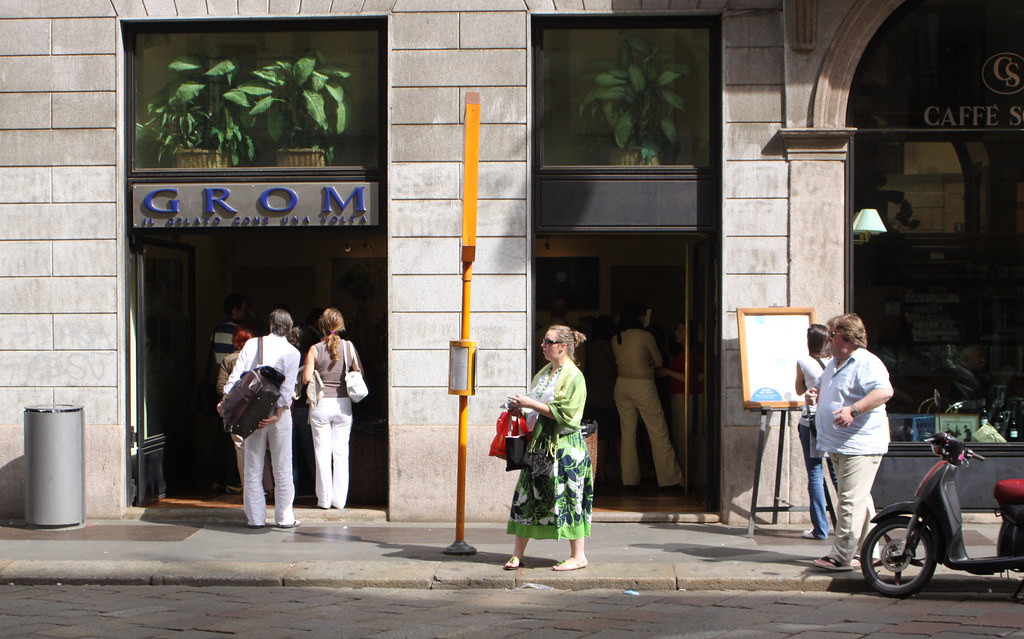


Znalezione obrazy dla zapytania grom gelato

Znalezione obrazy dla zapytania grom gelato


Saturday, June 4, 2016

A special date for Italy: 2 June

In 2016 we celebrated the 70th anniversary of the birth of the Italian Republic. 

It was 2nd June 1946, when the Italian people turned the page of their history book. Because of the institutional referendum, they put to an end the monarchy, choosing a form of republican government.

The referendum gave the victory to the Republicans with 54.3% of the votes against 47.7% for the monarchists. For the first time (excluding the administrative elections in March and April in 1946 which concerned only some regions) in Italy voted even women. An achievement came after years of battles and much later than in the other European countries.

With the end of the monarchy, which was in whole Italy from 1861, also it was proclaimed the exile of the Savoy. Many people believed that they were leading the country to disaster with fascism and the Second World War. King Umberto II of Savoy left Italy directly from Ciampino airport and went to Portugal. He had been the king just for a month, from 9th May 1946 until 18th June : he has the nickname "King of May". Umberto accepted exile and lived in Cascais (Portugal) and in Geneva.


How could you ask for wine in Roman taverns?

These were the typical measures of wine served in the ancient Roman taverns:

- 1 liter, called "tubbo". If it was served twice, it was called "er barzilai" because of Salvatore Barzilai who during the late Nineteenth century elections precisely offered 2 liters of wine to those who voted for him,

- 1/2 liter, the "fojetta" (foglietta),

- 1/4, the "quartino" (the quarter),

- 1/5 of a liter called the "altar boy" because that was the amount poured by the altar boy during the Saint Mass

- 1/10 of a liter, also called "whisper" or "breath" because somebody who was ordering it, was whispering because of the shame of not having enough money to afford more!


Source: Passeggiate per Roma

Sunday, May 29, 2016

LangFocus - The Romance Languages and what makes them amazing

I can't wait to show you a great canal on Youtube which I have come across a few days ago. The films are in English and the man who is talking to us, focuses on different languages and linguistic issues. I enjoy watching him because I always discover something new, for example the history of Finnish (which you can see here).


I recommend you to see something related to Italian: a film about the Romance Languages.


I hope you will enjoy it!


The Mouth of Truth

The lies, as you know, have short legs but is it always like that?.... In Rome in the Church Santa Maria in Cosmedin, you can find the Mouth of Truth. If you lie holding your hand into the Mouth of Truth, it will be cut immediately.

This famous marble mask called La Bocca della Verità (The Mouth of Truth) is known around the world for its legend, but not many know that its origins have roots in the Middle Ages. The hand of somebody who was telling too many lies, was actually cut by an executioner placed just behind the mask.

One of the famous legends is about a noblewoman accused of adultery by her husband who wanted a judgment of the Mouth of Truth. When she was walking to the Mouth, between two columns of the crowd , a boy suddenly gave her a passionate kiss. Faced general indignation, he justified himself saying that he had endured a poor innocent girl; The woman, meanwhile, slipped her hand into the rock and declared: "I swear that no man except my husband and the young man who just now kissed me never touched me!". She was recognized by the Mouth as innocent and her hand was saved. It fact she was very clever because earlier she had invented with her lover all this "sudden kiss" in order to distract the judge behind the Mouth.

Are you brave enough to visit La Booca della Verità?


Even all those holes have a history

In Via dei Fori Imperiali there is a building next to the beautiful church of Saints Cosmas and Damian (to visit!) which has a very curious holes, arranged in a symmetrical pattern.
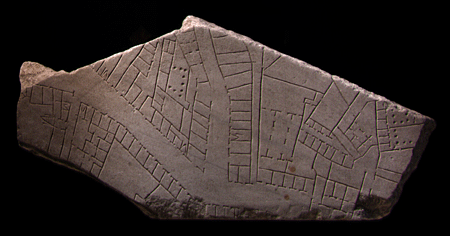
On this wall there was a giant map of Ancient Rome, the Forma Urbis, large 13 x 18 meters .
It was the ancient cadastral database of properties in Rome, engraved on marble slabs. All the population could see and admire the map.
It is thought that it was a hard copy in case of fire or other damage. It was the copy that would not be damaged.
For centuries, only 1186 of the original fragments were recovered. This is only 1/6 of the entire surface.
Below there is a link to the website of the Stanford University where you can see the found fragments.

http://formaurbis.stanford.edu/


Sunday, May 8, 2016

Well, let's give them something to drink

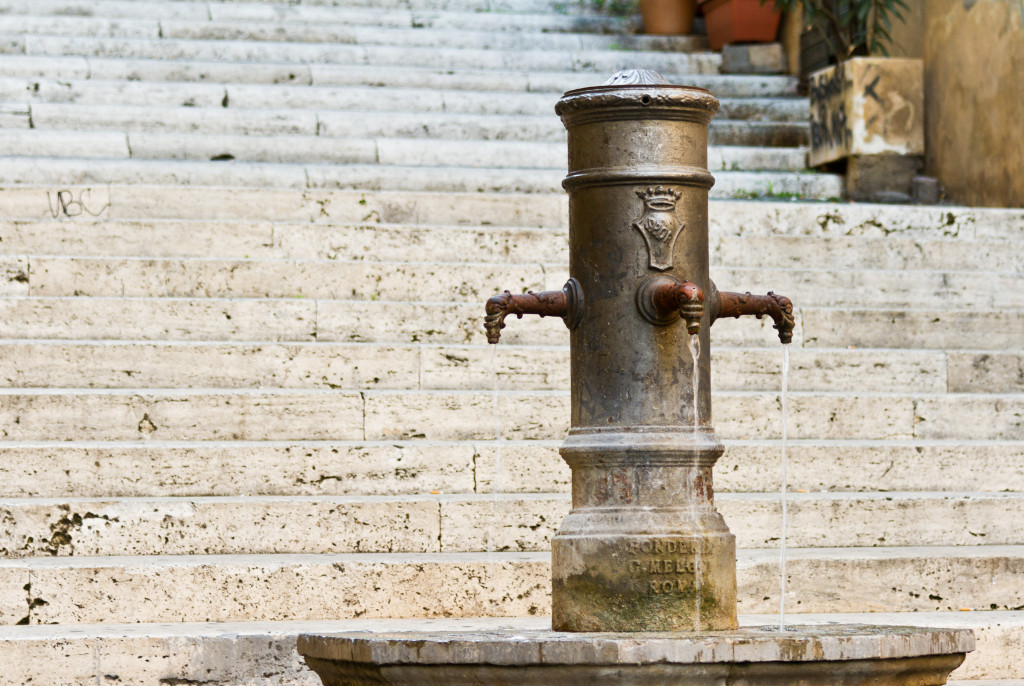
In Rome you do not run the risk of dying of thirst even in the hottest months. There is no other city in the world that has 2,000 public fountains from which flows fresh and clear water to drink.We are talking about the famous fountains that are called "Nasoni" from their particular form.The Nasoni are fountains that can be defined "democratic" because you can find them everywhere: in the historic center, in residential districts and in the suburbs. They are made of iron and at its center they have a small hole (on the top) from which you drink if you cover the bigger hole with your hand.

During the hot days it is a real pleasure to drink the water of the fountains of Rome or fill your bottles. It is free, it is good and it is always fresh because of its continuous and uninterrupted movement. 


The most curious and rare Nasone is located in Via della Cordonata because it has three taps, from which comes the water, instead of the traditional model that has a single cinnamon.


Since the days of ancient Rome, the water and the fountains were the elements that characterized the urban landscape and the artistic and cultural heritage of the city.
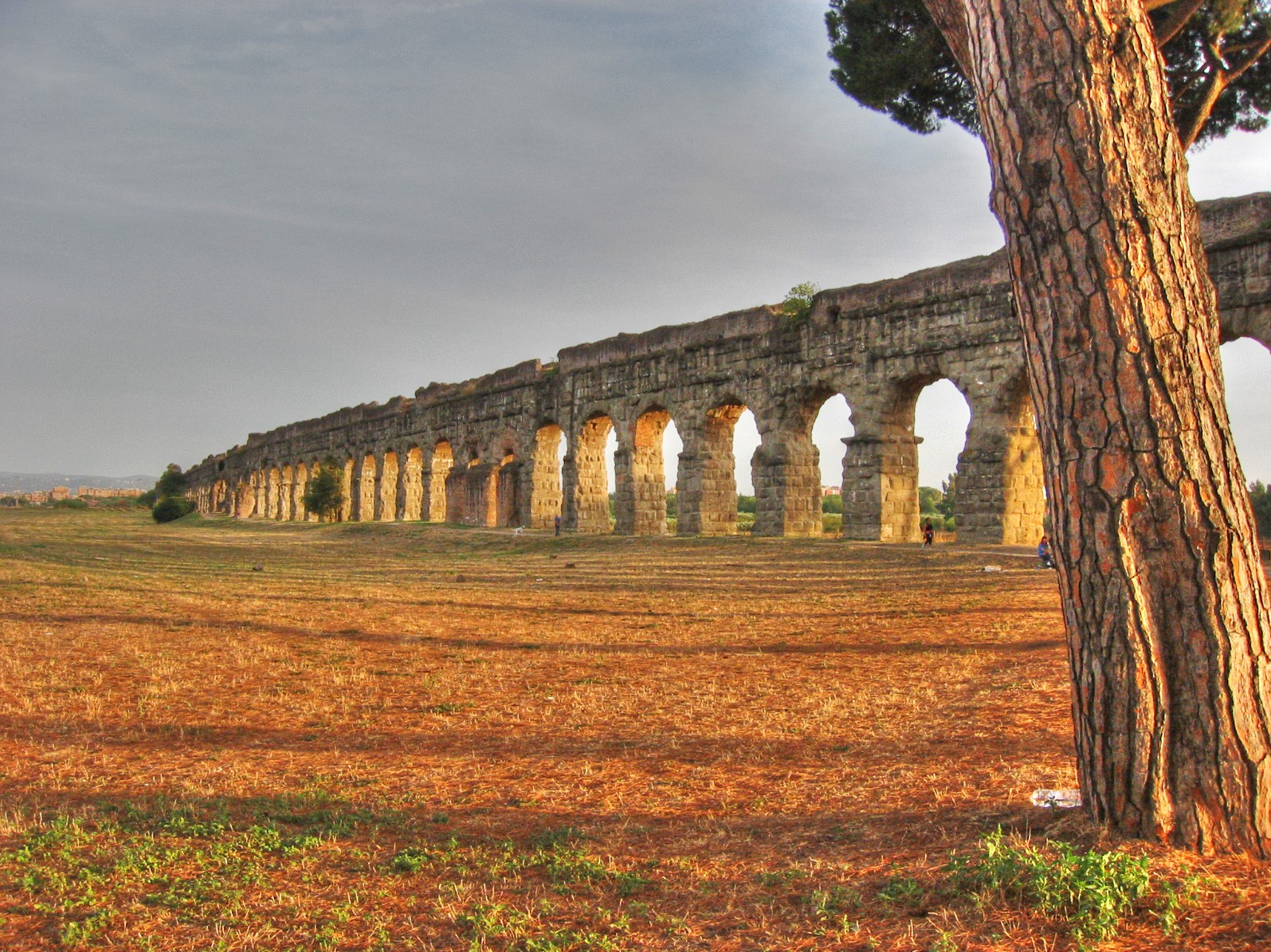
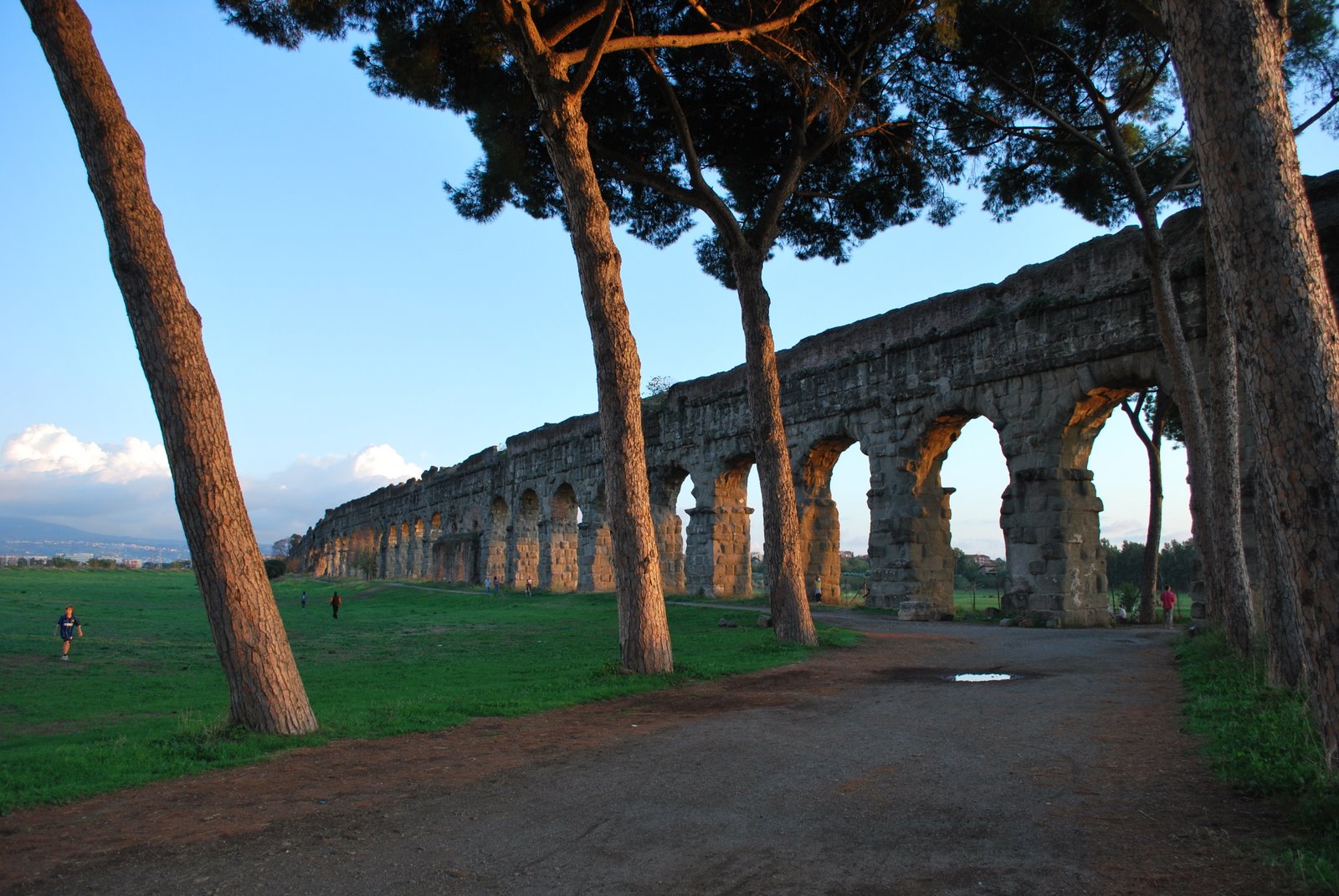
 Some of the fountains were the ends of the aqueducts that were providing water to the city since the Roman times.   


The Trevi fountain, for example, is the Acqua Vergine aqueduct arrival point, while the Fountain of Moses or the Aqua Felix is ​​the the end aqueduct Felice. The squares and the most beautiful streets of Rome, the courtyards of the palaces of the most important noble families, parks and villas of great families have always had the fountains which were designed and made by artists and architects who have made the city of Rome the most beautiful in the world.


Just think of the Fountain of the Four Rivers in Piazza di Spagna, the Acqua Paola Fountain at Gianicolo, the fountains of Piazza Navona, the beautiful Fountain of the Turtles, the Triton Fountain and all the Baroque and Renaissance works of Bernini, Della Porta, Salvi and many others. 

All the water that comes out of the fountains of Rome is not lost or wasted because most is stored in large tanks in order to be used for watering gardens and parks of Rome.