Monday, March 21, 2016

Garibaldi and his men

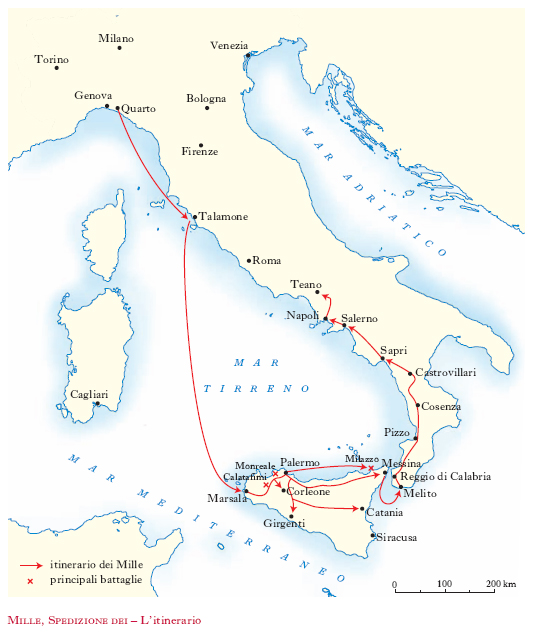
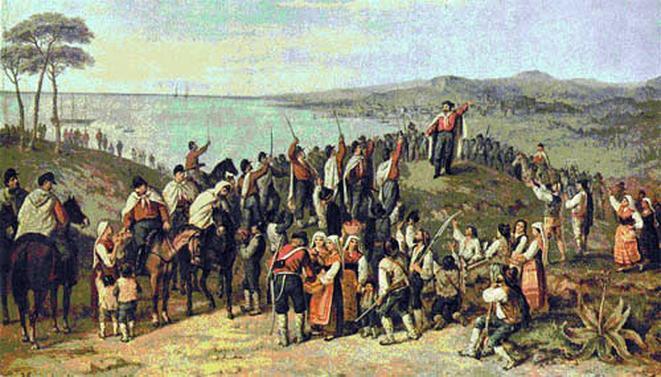
The Expedition of the Thousand was the crucial episode of the Risorgimento. It happened in 1860 when a thousand volunteers, under the command of Giuseppe Garibaldi, set off in the night between 5 and 6 May from Quarto, in the territory of the Kingdom of Sardinia, to Sicily which were at that time in the Kingdom of Two Sicilies.

The purpose of the expedition was to support the revolts in the island and to end the Bourbon government. The volunteers landed at Marsala on May 11th and, thanks to the broad consent of the local population, were strengthened. After a series of victorious battles against the Bourbon army, the volunteers managed to conquer the entire Kingdom of the Two Sicilies allowing the annexation to the Italian State.

The shirt or red jacket was the mark chosen by Giuseppe Garibaldi and his volunteers since 1843, when the patriot gathered in Montevideo 500 Italians, the Italian Legion to defend the Uruguayan Republic by the Argentine dictator Juan Manuel de Rosas, who wanted to conquer it.

Garibaldi, relying on little funding for his business, he found the red woolen cloth, usually used for coats of butchers in order to hide the animal blood stains, to coat his troops.

The red shirts were among the protagonists of the birth of the Kingdom of Italy.


Garibaldi's Expedition od the Thousand


Padri della Patria - Fathers of the Nation 


Sunday, March 20, 2016

The short story of Italian Unification


In 18th century Italy was not united as we know it today, but divided into many small states: the United Lombardo-Veneto, the Kingdom of Sardinia, the Papal States and the Kingdom of the Two Sicilies, the duchies of Modena, Massa and Carrara , Lucca and Parma, the Grand Duchy of Tuscany.
All these states, with the exception of the Kingdom of Sardinia, which was ruled by King Vittorio Emanuele I, were subjected to Austria. This situation made Italy an undeveloped peninsula and economically backward in comparison to other European countries.

The Risorgimento and secret societiesIn this climate began the Risorgimento, which is the period in which the inhabitants of the Peninsula created initiatives for its reunification. The people who pledged themselves to pursue the idea of ​​Unity of Italy were called patriots. They carried out their activities in secret to prevent the Austrians arrested them.One of the patriots Silvio Pellico, the writer of "My imprisonment", the story of the time when he was a prisoner of the Austria and Giuseppe Mazzini, who founded the Young Italy in exile in Spain.  

The revolutionary movements and the three Wars of IndependenceThe unification was not a peaceful process because of many revolutions and battles against the enemy. But the spontaneous movements were not enough and three Independence Wars were necessary to achieve the unification of Italy.

The first war of independence broke out in 1848. The King of Sardinia, Carlo Alberto, at the request of Lombard patriots declared war on Austria. The war, initially victorious, was later defeated and the king had to give the kingdom to his son Vittorio Emanuele II.

The Second War of Independence broke out in 1859 and led to the liberation of Lombardy and Sicily. The liberation of Sicily took place with the action of Giuseppe Garibaldi, who had an army of a thousand men. This action is remembered as the "Expedition of the Thousand". 

In 1861 it was declared the kingdom of Italy with Torino as a capital.

But Italy was not yet fully liberated.  The regions of Veneto and Lazio were lacking.

During the Third War of Independence, Veneto was incorporated to the Kingdom and remained only Lazio. In 1871 the briganti (Italian soldiers) arrived in Rome and opened a breach in the walls of the city liberating Rome. The unification of Italy was completed.


Saturday, March 19, 2016

Evviva l'Italia! 17th March

Turin, March 17, 1861: the proclamation of the Kingdom of Italy

"The Senate and the Chamber of Deputies have approved; we have sanctioned and promulgate the following: Article one: The King Vittorio Emanuele II assumes for himself and his successors the title of King of Italy. We order that the present, bearing the state seal, is included in the collection of the acts of the government, sending anyone up to observe and enforce it as state law. From Turin this day of March 17, 1861"


These words represent the text of the law n. 4671 of the Kingdom of Sardinia. A few days after the March 17, the same text would become the law n. 1 of the Kingdom of Italy.


The international reaction to the proclamation of the Kingdom was sudden and, in some cases, enthusiastic. The new state was recognized, in a few weeks, by the Swiss government, the UK and US.

The Kingdom of Italy was thus "created" by a decision taken by the Parliament met in Turin, in the Palazzo Carignano. Its representatives were elected a few months earlier, in January 1861. The elections were indeed held in all regions which, through plebiscites, in the previous year had requested the annexation to the Kingdom of Savoy.

What is the story of Risorgimento? Who is considerated to be a hero? We will find out in next posts.


Monday, January 18, 2016

These are our roots - the Roman culture.


The ancient history reveals Roman modus vivendi attractive and interesting to learn. For example, the Romans counted the hours of a day dividing time into twelve parts and not twenty-four, as we do now. The purpose was to consider the parts of the sun and distinguish them from those of the dark, thus the duration of the different sections of time was not the same during the whole year. 
Moving on to marriages, the custom to take the bride in arms comes from the ancient Romans, as well as to throw handfuls of rice well-wishing to the newly married couple. Also brides were dressed in white but in Rome they had a red veil. The toast: the Romans drank as many glasses of wine as there were letters that made up the name of the person chosen.  To cure diseases, the most popular was cabbage. The number 17 was bringing bad luck, this comes from  the Roman numeral system. It represents 17 as XVII witch is similar to the word Vixi, which means "I lived", "I don't live anymore".


These are our roots - the Roman culture.

If you are curious how the Ancient Rome looked like and you would like to feel the atmosphere of that time I truly recommend the video below.


Sunday, January 17, 2016

Mother of the churches

Christian Rome is not only the Vatican but also includes other stops. A very important place is the Basilica of St. John Lateran.


The Church is called the "mother of the churches of Rome and of all the churches in the world" to indicate how much history and faith are enclosed inside the imposing building and the area around.

The area belonged to the old noble family of the Lateran. Because of the confiscation by the country it came under the imperial treasury, and then became repeatedly barracks and military custody. In 313 the Emperor Constantine erected this magnificent church in Rome, in order to offer to the emerging Church a place for a spiritual exercise.

The Basilica was consecrated in 324 by Pope Sylvester I. The Basilica was the first seat of pope until 1377. The pope moved to Vatican because Lateran had been damaged by fire. Over the centuries, the Basilica of Saint John has been repeatedly plundered, ruined, renovated and changed, also enhanced thanks to the great artists.

The Basilica has always maintained a five naves and a magnificent cloister. Also today the Basilica of St. John offers a museum with important liturgical artefacts and things which belonged to the noble families that once inhabited the area. On the occasion of the Jubilee of 2000 was inaugurated the new Holy Door made by the architect Floriano Bodini.

Do you have 8 minutes? Let's have a quick visit in this important and beautiful place!


Friday, January 1, 2016

Vatican stories: The Vatican Museums

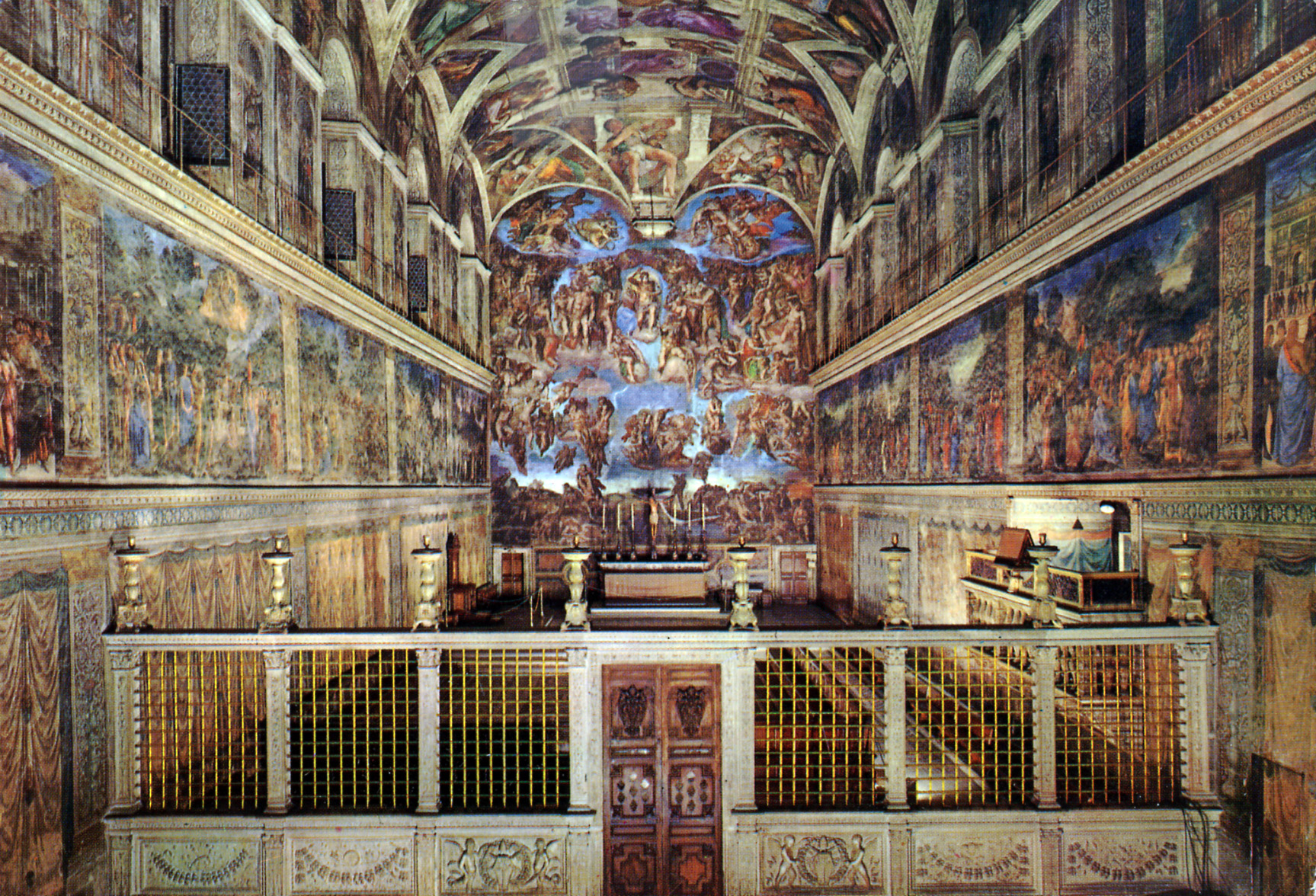
The Vatican Museums are one of the richest in the world. Here we can find a lot of precious exhibits. There are a lot of different rooms and corridors. It is worth seeing also a huge garden. 


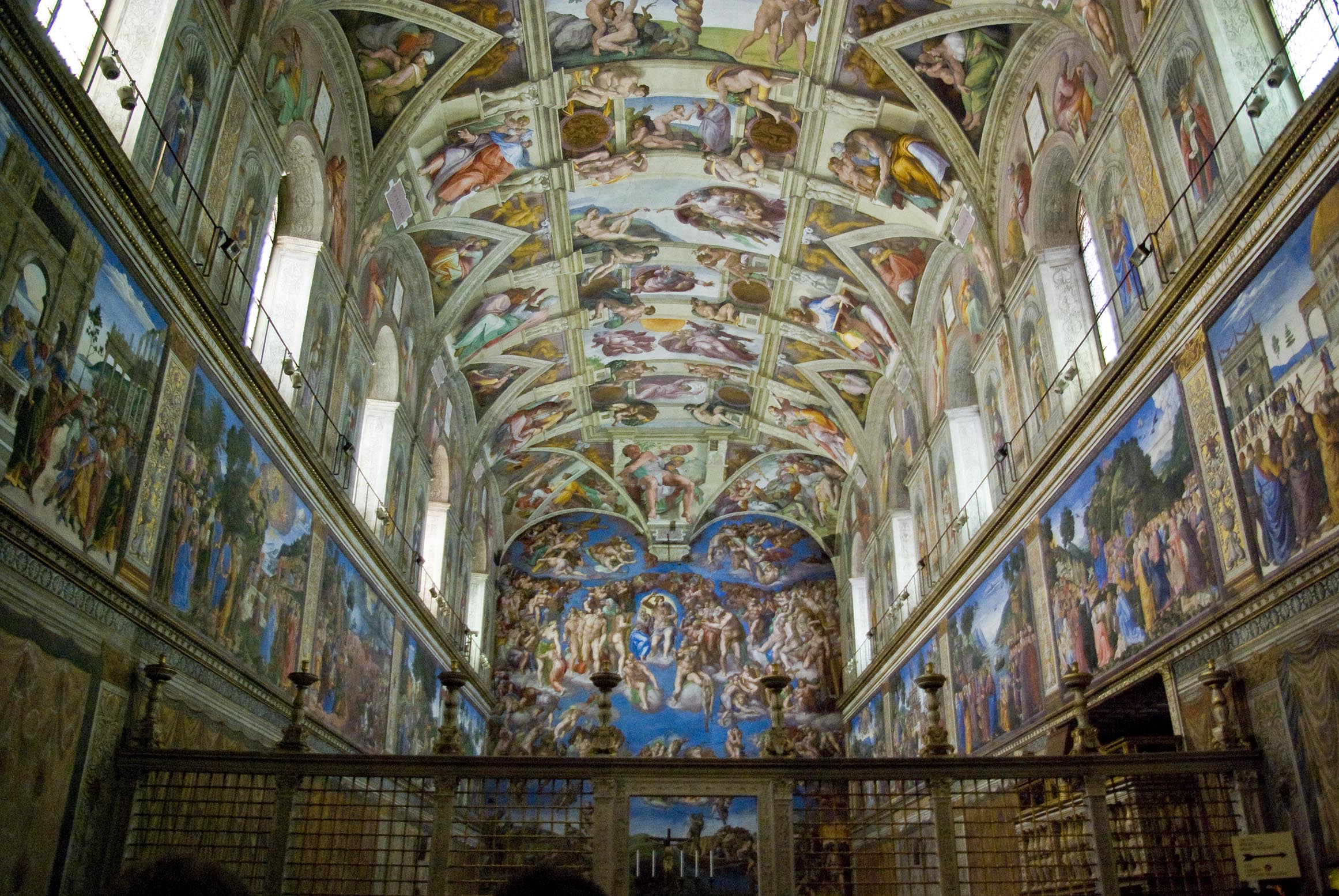
The most famous is the Sistine Chapel designed and painted by Michelangelo in 15th century. Everybody knows more or less this brilliant masterpiece but I have for you some interesting facts:

Source


  • The Sistine Chapel, dedicated to Our Lady of the Assumption, is one of the most famous cultural and artistic treasures of the Vatican City. Welcomes over 25,000 visitors a day. 
  • The name refers to the Pope Sixtus IV della Rovere who had requested the construction of this chapel in 1477.
  • When the work was commissioned to Michelangelo, he was not enthusiastic, because his main artistic activity was the sculpture, with real regret he accepted the job.
  •  Many believe that Michelangelo painted the ceiling lying on his back, he actually built a scaffolding, so he could paint with accuracy and control
  • The whole area of ​​the ceiling of the Sistine Chapel measures 1/6 of a football field
  •  The naked figures present in the fresco were considered inappropriate by the Council of Trent, which in 1564 ordered to change it. Daniele da Volterra covered the some parts with fig leaves, clothes, or other items.
  •  In the Sistine Chapel, the College of Cardinals meet to elect the Pope from 1492
  •  The biggest damage that visitors can do to the Sistine Chapel is invisible for a naked eye: sweat and heat from the skin of 5,000 visitors a day are a threat to the conservation of the masterpiece. In fact, the temperature and humidity are always under control.
Instead of the photos I propose you an interactive trip which is possible thanks to the students of Villanova University in Pennsylvania. They worked for 2 years with a special, advanced camera and now we can see the result. You can walk around the Sistine Chapel and zoom whatever you want. Enjoy!

VIRTUAL TRIP

Monday, December 14, 2015

Coffee break

Let's have a rest before going to the next point of our journey through Rome.
In Rome there a lot of charming caffeterie where we can have a cup of coffee. This drink is extremely important for all Italians.


First of all, we have to consider that around the world there are different manners of making coffee. However, Italians made for us two crucial items for coffee industry: mokka and the coffee machine.

Mokka was made by a man called Bialetti in 1933 but it became a real icon in the fifties. The symbol of the factory was a little man with moustaches. The mokka pot is a stove-top item that produces coffee by passing boiling water pressurized by steam through ground coffee. The innovative idea meet the needs of Italians and we can say that all nation has one at home. Many other companies imitate Bialetti but we have to remember that the original is only one. First model was silver and had a lot of angles. Now we have different shapes, colours and also types. For example, there is Mukka - a mokka which makes a delicious cappuccino.


The other important invention which everybody knows is espresso. This little, strong coffee could not exist if not for the brilliant idea of Luigi Bezzera who in 1901 made a coffee machine for bars. All began when the man wanted to prepare coffee very quickly. That’s why now we say espresso. The name emphasize the velocity of preparation and consuming. Additionally espresso is a past participate of the verb to express (it. esprimere) which refers to the intense taste of each cup.

Besides the manner of preparation, the names of drinks are worth also knowing. For example, latte macchiato means stained milk. It is simply a lot of milk with a little stain, spot  (It. macchia) of coffee. Another curious story refers to cappuccino. It took its name from the colour of the habits of Capuchin (It. cappuccini) who had invented this type of coffee.
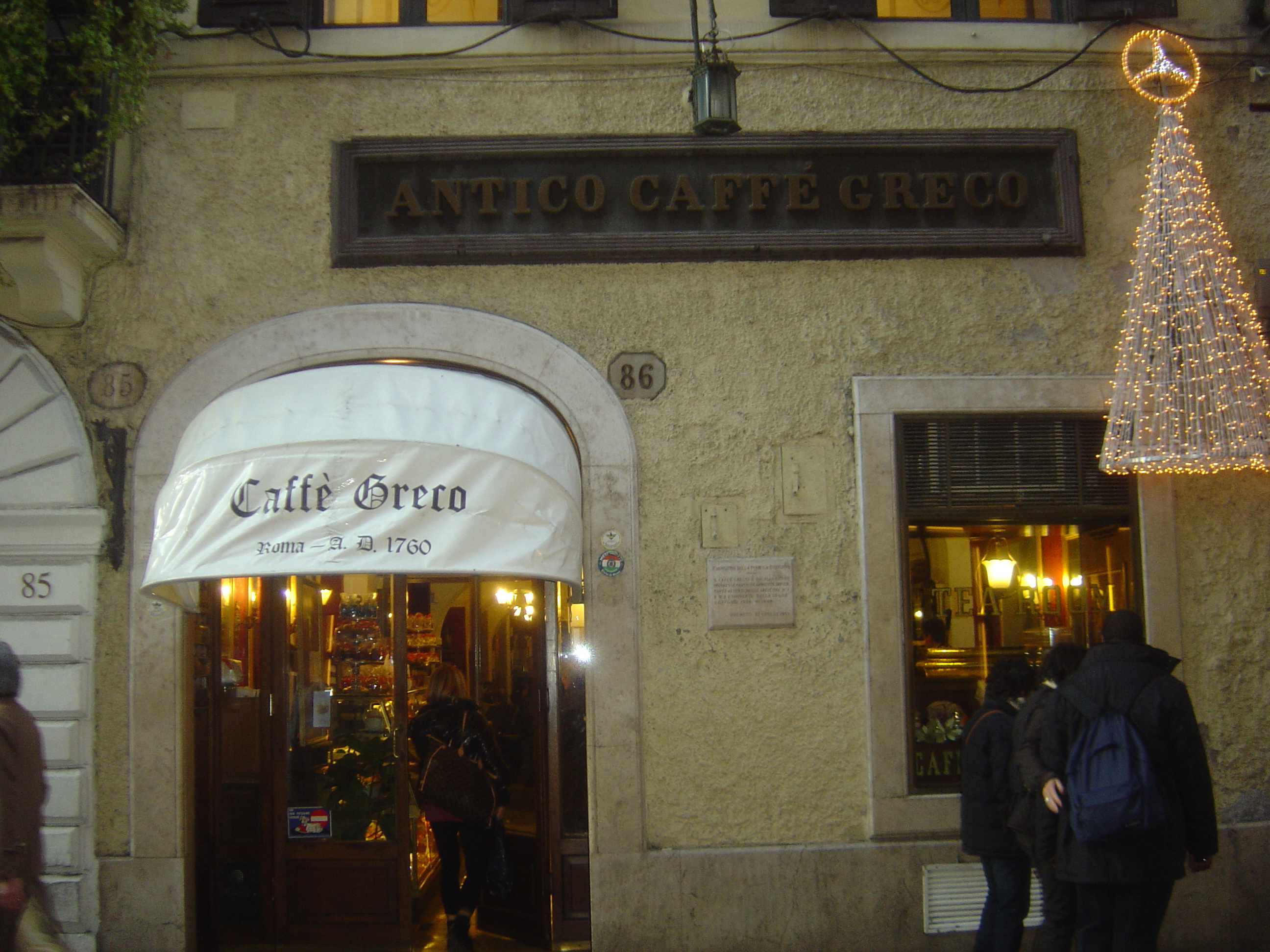
There are plenty of different absorbing coffee stories which can make time pass more pleasantly with a cup of coffee in your hand near Vaticano but one of the oldest and the most famous one is without doubts Antico Caffè Greco in Via Condotti. It is worth knowing that in Via Condotti  there are the most expensive and luxiourious shops in Rome. This cafeteria is also very elegant and always full of people. It was like that also in the past when writers were coming here to talk in a pleasant atmosphere. So, your turn now? :)